
How to Spot an Ultra-Processed Food: A Pediatric Food Detective’s Guide
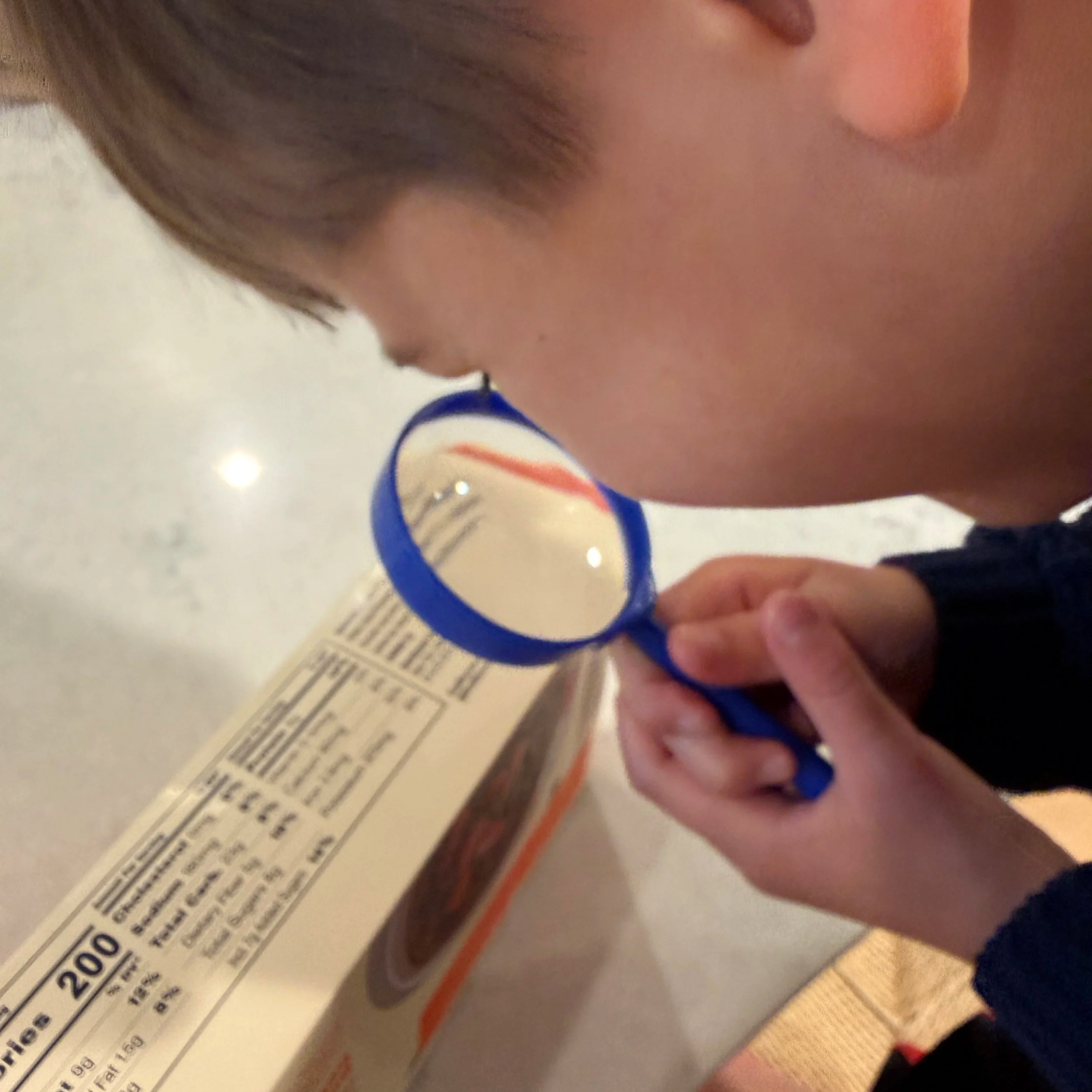
A patient of the practice investigating an ingredient list.
By Kathryn Fink, MS3 and Rebecca Unger, MD
Setting the Stage: Healthy People 2025-2030
Before stepping into the role of a food detective, it is helpful to understand the bigger picture. National nutrition priorities, including those outlined in Healthy People 2025–2030, highlight the growing impact of dietary patterns on long-term health, particularly in children.
The 2025-2030 Dietary Guidelines for the Healthy People 2030 initiative recommends limiting intake of highly processed (aka ultraprocessed), ready to eat foods and prioritize nutrient dense foods, whole foods and fruits, vegetables, and whole grains. This includes limiting foods with added sugars, sodium, and chemical additives.
Why should we crack this case? Eating a lot of ultraprocessed foods increases the risk of cancer, weight gain, diabetes, and liver disease.
With that foundation in mind, we can turn to the practical question families face every day: how to recognize ultra-processed foods and make healthier choices.
Clue #1: The Ingredient List Is Suspiciously Long
A good rule of thumb: if the ingredient list reads more like a chemistry experiment than a recipe, it’s likely ultra-processed.
Look for:
Long lists (especially >5–7 ingredients)
Ingredients you wouldn’t use at home
Words you can’t easily pronounce
Examples:
“Maltodextrin,” “modified starch,” “soy protein isolate,” “mono- and diglycerides”
Detective tip: If you wouldn’t find it in your kitchen, question why it’s in your child’s snack.
Clue #2: Additives, Preservatives, and “Enhancers”
Ultra-processed foods are engineered to last longer and taste better.
Common red flags:
Artificial colors (Red 40, Yellow 5, Titanium dioxide)
Artificial flavors (MSG, disodium inosinate)
Preservatives (BHA, BHT)
Emulsifiers (hydrogenated oils, soy lecithin) and stabilizers
These are added to improve shelf life, texture, and palatability, often at the expense of nutritional quality.
Clue #3: Hidden Sugars Everywhere
Sugar doesn’t always show up as “sugar.”
Watch for:
High fructose corn syrup
Cane juice or evaporated cane syrup
Dextrose, fructose, maltose, aspartame, sucralose
Fruit juice concentrate
Even foods marketed as “natural” or “organic” can still be ultra-processed and high in added sugars.
Clue #4: It Comes Ready-to-Eat (and Hard to Stop Eating)
Ultra-processed foods are typically:
Packaged
Ready-to-eat or heat
Designed to be highly palatable
Examples include chips, packaged cookies, sugary cereals, snack bars, flavored yogurts, and frozen nuggets.
Detective tip: If it comes in a “crinkly” bag, it is probably ultraprocessed
Clue #5: Health Halos Can Be Misleading
Packaging is part of the disguise.
Be cautious with labels like:
“Gluten-free”
“Low-fat”
“Made with whole grains”
“All natural”
These claims do not mean the food is not ultra-processed.
Detective tip: Turn the package over. The ingredient list tells the real story.
Building a Better Snack: Healthy Alternatives Kids Will Actually Eat
The goal is not perfection. It is replacing ultra-processed snacks with options that are simpler, nourishing, and still appealing to kids.
Think of snacks as mini-meals that include fiber, protein, and healthy fats when possible.
Easy, Whole-Food Snack Ideas
Apple slices with peanut butter
Banana with almond butter
Berries with plain or low-sugar yogurt
Cheese sticks with grapes
Hard-boiled eggs with whole grain crackers
Crunchy and Savory Options
Carrots, cucumbers, or bell peppers with hummus
Whole grain toast with avocado
Half a sandwich on whole-grain bread
Protein-Packed Snacks
Trail mix (make your own family jar at home!)
Cottage cheese with fruit
Greek yogurt with honey and low-sugar granola (homemade parfait)
Sweet Treats with Fewer Additives
Frozen banana with a drizzle of dark chocolate
Smoothies (fruit, milk, nut butter or yogurt, maybe even some sneaky veggies)
Putting It All Together
You do not need to eliminate ultra-processed foods entirely to make a meaningful difference. Small, consistent changes can go a long way.
As a food detective, your role is not to catch every single culprit. It is to:
Recognize patterns
Ask better questions
Make informed choices most of the time
Even small changes early in life can shape long-term health in meaningful ways!