
Safely Spring into Sports: Get ready to get ready!

By Rebecca Unger, MD and Ryan Martynowicz, MS3
It is that time again! Time to make a checklist for spring sports and physical activity. This will help you be prepared, stay safe and be on top of your game before getting to the starting line!
Schedule your Pre-Participation Physical with your health care provider
Why? It is more than just a school form. We check on your overall health, vaccination updates, heart health, muscle and joint stability and flexibility, and family history.
Gradual Conditioning
Why? By slowly reminding your brain and muscles about how to condition for your sport(s), you will prevent injury. Start at least several weeks before your sport begins. Focus on cardiovascular endurance and gradual strength training. Cross-Training rocks! By taking part in diverse movements, you will avoid overusing specific muscle groups.
Warm up and cool down
Why? Before your workouts, use dynamic stretching (lunges, leg swings, arm circles, squats, high knees, butt kicks) to safely wake up your muscles. Cool down with more static stretching (holding a pose for 30 seconds) to reduce soreness and increase flexibility. Ask your coach or other knowledgeable resource people for ideas.
Hydrate, hydrate, hydrate
Why? Start with water and avoid sugary drinks to quench thirst. If you are sweating a lot, drink a sports drink after you have had had water.
Equip yourself!
Why? Think about helmets, mouth guards, and eye protection in relationship to your physical activities. For more information about sport specific regulations, please check out the web site: www.healthychildren.org: Prevent Sports Injuries in Children
Get ready to rest!
Why? Allowing 1-2 days of rest each week will help your muscles recover safely.
Stress and sportsmanship
Why? It is important teach your children the value of effort, hard work, sportsmanship, all of which are important life skills! Parents are role models for children in sports and other physical activities. Talk as a family about potential for sports related pressure and emotional stress. Most importantly, give positive feedback and encourage having fun!
Other stuff
What? Clarify and update your emergency contact information. Understand when to “sit out” (pain, head trauma, dizziness). Understand safe play rules specific for your sport.
In general, it is recommended that all children between 6-17 years old get at least 60 minutes/day (does not have to be all at once!) of moderate to vigorous physical activity. They should also be active with movement that strengthens bones and muscles at least 3 days/week. In addition to organized sports, think about rock climbing, dancing, weight training, martial arts, and making obstacle courses in your own backyard, playground, or living room!
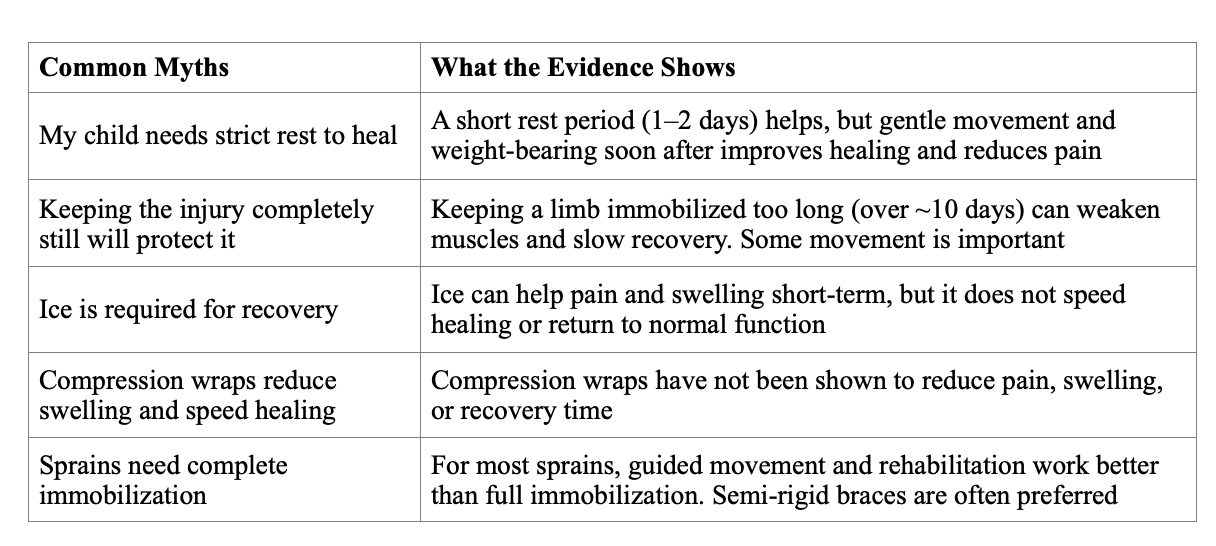
See below for more information about injuries including concussions, sprains, strains, and fractures:
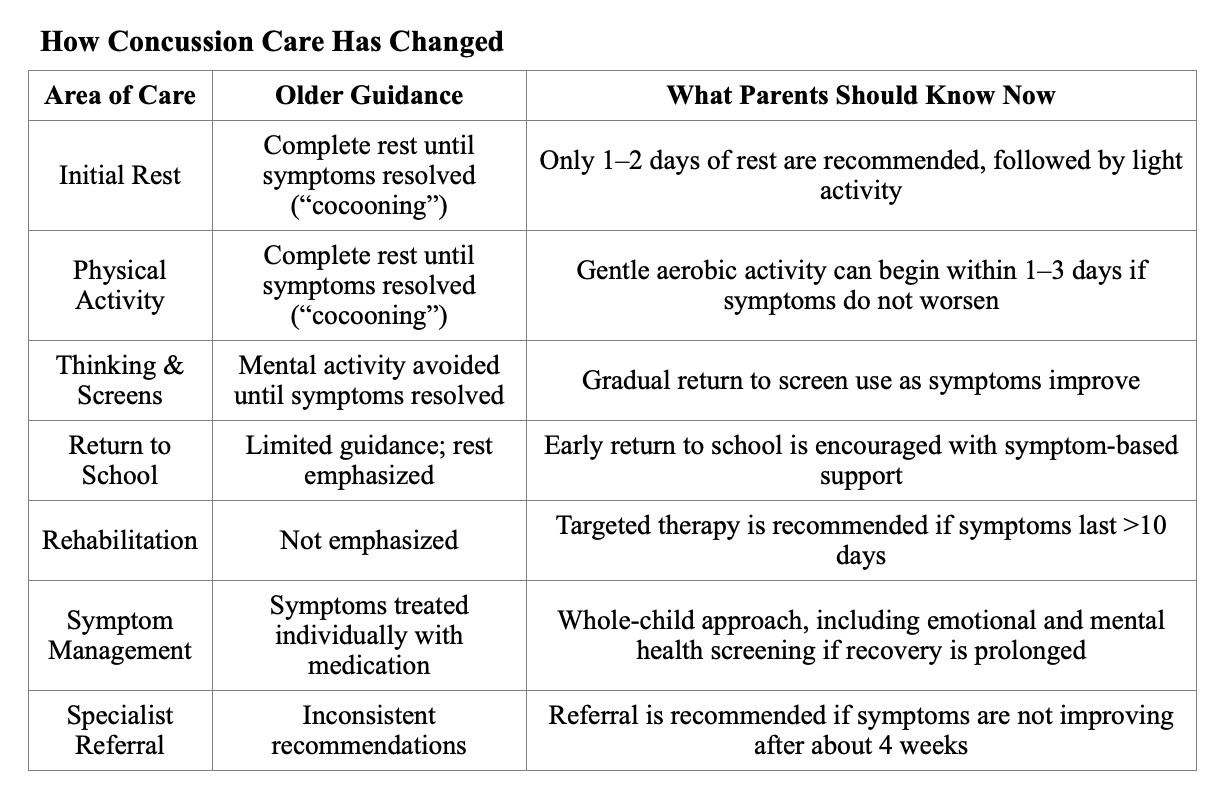
Common injury treatments: Common Myths vs Reality
Sprain: injury involving the stretching or tearing of ligaments, which connect two bones
Strain: injury involving the stretching or tearing tendons, which connect muscles to bones
Fracture: a break in one or more bones
Resources
www.healthychildren.org: Is-Your-Child-Ready-for-Sports.
www.healthychildren.org: Energy-Out-Daily-Physical-Activity-Recommendations.
https://odphp.health.gov/healthypeople/objectives-and-data/browse-objectives/physical-activity
www.healthychildren.org: Physical-Activity-for-Children-with-Disabilities-AAP-Policy-Explained
https://moveunitedsport.org/sports/adaptive-sports/
www.healthychildren.org: Sports-Injuries-Acute-Soft-Tissue-Injuries.
www.healthychildren.org: Concussions in Children & Teens: What Parents Need to Know
www.healthychildren.org: Sports-Related-Concussion-Understanding-the-Risks-Signs-Symptoms