Beyond the Peanut: When, Why, and How to Introduce Allergenic Foods to Your Baby
By: Christopher Meng, MS3 and Rebecca Unger, MD
What’s Going On with Food Allergies?
Food allergies are increasingly common, affecting about 11% of adults and 8% of children in the United States.
Managing food allergies often requires careful label reading, meal planning, and adjustments at school and social events. They are also linked to other atopic diseases, including eczema, asthma, and environmental allergies.
Food Allergy vs. Food Intolerance
Food allergies involve the immune system. The body mistakenly identifies a food, such as peanuts or eggs, as harmful and reacts, with symptoms ranging from hives to anaphylaxis.
Food intolerances do not involve the immune system and result from difficulty digesting a food. Lactose intolerance is a common example.
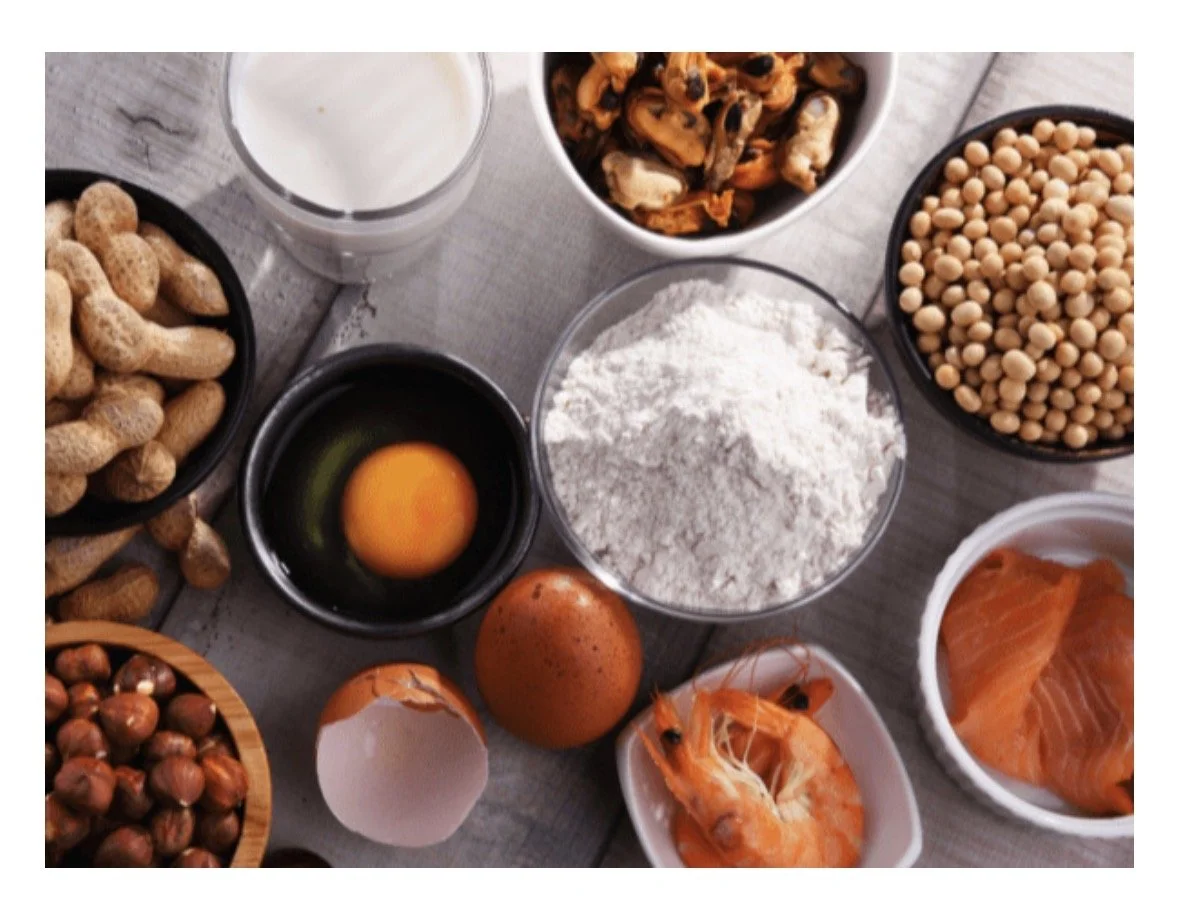
This blog post focuses on IgE-mediated food allergies, which cause immediate reactions. Most reactions are caused by the “Big 9” allergens: milk, eggs, fish, shellfish, tree nuts, peanuts, wheat, soybeans, and sesame. The U.S. Food and Drug Administration (FDA) requires these allergens to be clearly labeled on packaged foods.
What Do Allergic Reactions Look Like?
The most common food allergies are IgE-mediated and occur within minutes to a few hours after exposure.
Common symptoms include:
Hives (welts that look like mosquito bites)
Swelling of the eyes or lips
Shortness of breath
Vomiting or stomach pain
Feeling faint
In babies, symptoms may include vomiting, swelling, excessive crying, arching, or unusual tiredness.
Anaphylaxis and Urgent Care
Anaphylaxis is a severe allergic reaction that can affect multiple body systems and requires immediate treatment.
The first and most important treatment is epinephrine, given by an auto-injector such as an EpiPen/AuviQ or by a nasal spray such as Neffy. Anyone with a known food allergy should always have access to epinephrine. After giving epinephrine, call 911 or go to the emergency room. With mild symptoms, please call our office. Page the provider on call if it is after office hours.
Other food allergies that do not involve the IgE-mediated system cause slower and less emergent reactions. Symptoms may take hours to days to appear and can include vomiting, diarrhea, feeding difficulties, or poor weight gain. Both immediate and delayed reactions should be evaluated by an allergist.
What Does the Research Show?
Guidance on food allergy prevention has changed. Delaying allergenic foods was once recommended, but research showed it did not reduce allergy risk.
In 2015, the Learning Early About Peanut Allergy (LEAP) study showed that introducing peanut-containing foods during infancy reduced the risk of peanut allergy. Other studies, including the PETIT trial, found similar results for egg allergy. Together, these findings suggest that early, regular exposure helps the immune system develop tolerance.
Based on the growing body of evidence, groups including the National Institute of Allergy and Infectious Diseases (NIAID), American Academy of Pediatrics (AAP), American Academy of Allergy, Asthma & Immunology (AAAAI), and American College of Allergy, Asthma & Immunology (ACAAI) recommend introducing common allergenic foods, generally around 4 to 6 months of age.
Local research at Northwestern, led by Dr. Ruchi Gupta and the Center for Food Allergy and Asthma Research (CFAAR), continues to advance food allergy prevention and care. Some of our patients at NWCP have been enrolled in these studies looking at early exposure to allergens besides peanuts.
How Do You Introduce Allergenic Foods?
Allergenic foods can be introduced once a baby is developmentally ready for solid foods, usually around 4 to 6 months of age.
Most infants start with purees of fruits and vegetables or infant cereals before adding allergenic foods.
Tips for safe introduction:
Introduce one new food at a time
Use infant-safe forms of foods (for example, thinned peanut butter)
Introduce new foods when your baby is healthy
Watch for reactions after feeding
Continue offering tolerated foods regularly
If your child has severe eczema or a known food allergy, speak with your pediatrician or an allergist before introducing allergenic foods.
Learn more:
American College of Allergy, Asthma and Immunology: Introducing peanut-containing foods to prevent peanut allergy
CFAAR: Early Introduction for Your Baby
Update on Treatment for Mild Allergic Reactions
For milder allergic reactions, it is important to keep an antihistamine available.
The American Academy of Allergy, Asthma & Immunology (AAAAI) recommends second-generation antihistamines such as cetirizine (Zyrtec) over previously recommended options like diphenhydramine (Benadryl). Cetirizine lasts longer and causes less sedation with fewer side effects.
More information:
https://www.aaaai.org/allergist-resources/ask-the-expert/answers/2025/cetirizine
Final Thoughts
Food allergies can feel overwhelming, but strong evidence now supports early introduction of allergenic foods as one way to reduce allergy risk.
If questions come up, our team of pediatricians, pediatric nurse practitioners, and nurses at Northwestern Children's Practice are here to help your family navigate feeding, development, and allergy concerns with confidence.
References
American College of Allergy, Asthma and Immunology. (2016, November 11). Introducing peanut-containing foods to prevent peanut allergy. YouTube. https://www.youtube.com/watch?v=9pVNFWi0XvU
CFAAR Home. www.feinberg.northwestern.edu. https://www.feinberg.northwestern.edu/sites/cfaar/
Diphenhydramine vs cetirizine for mild allergic reactions. (2025). Aaaai.org. https://www.aaaai.org/allergist-resources/ask-the-expert/answers/2025/cetirizine
Du Toit, G. et al. (2015). Randomized Trial of Peanut Consumption in Infants at Risk for Peanut Allergy. The New England Journal of Medicine, 372(9), 803–813. https://doi.org/10.1056/NEJMoa1414850
FDA. (2024, September 17). Food Allergies. U.S. Food and Drug Administration. https://www.fda.gov/food/nutrition-food-labeling-and-critical-foods/food-allergies
Fleischer, D. et al. (2021). A Consensus Approach to the Primary Prevention of Food Allergy Through Nutrition: Guidance from the American Academy of Allergy, Asthma, and Immunology; American College of Allergy, Asthma, and Immunology; and the Canadian Society for Allergy and Clinical Immunology. The Journal of Allergy and Clinical Immunology: In Practice, 9(1), 22-43.e4. https://doi.org/10.1016/j.jaip.2020.11.002
Greer, F. R. et al. (2019). The Effects of Early Nutritional Interventions on the Development of Atopic Disease in Infants and Children: The Role of Maternal Dietary Restriction, Breastfeeding, Hydrolyzed Formulas, and Timing of Introduction of Allergenic Complementary Foods. Pediatrics, 143(4), e20190281. https://doi.org/10.1542/peds.2019-0281
Gupta, R. S. et al. (2018). The Public Health Impact of Parent-Reported Childhood Food Allergies in the United States. Pediatrics, 142(6). https://doi.org/10.1542/peds.2018-1235
Gupta, R. S. et al. (2019). Prevalence and severity of food allergies among US adults. JAMA Network Open, 2(1), 1–14. https://doi.org/10.1001/jamanetworkopen.2018.5630
Natsume, O. et al. (2017). Two-step egg introduction for prevention of egg allergy in high-risk infants with eczema (PETIT): a randomised, double-blind, placebo-controlled trial. The Lancet, 389(10066), 276–286. https://doi.org/10.1016/s0140-6736(16)31418-0
Togias, A. et al. (2017). Addendum guidelines for the prevention of peanut allergy in the United States: Report of the National Institute of Allergy and Infectious Diseases-sponsored expert panel. https://doi.org/10.1016/j.jaci.2016.10.010