Caring Beyond Borders: Lessons from the Dominican Republic
By: Amy Manion, APRN, CPNP-PC
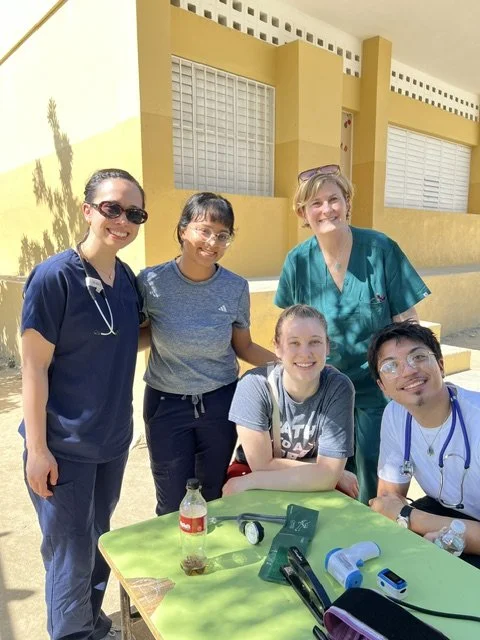
In January 2026, I had the privilege of traveling to the Dominican Republic with the Rush University Medical Center Office of Global Health in partnership with Community Empowerment. Our interprofessional team worked alongside local leaders to provide primary care services to underserved communities just outside of Santo Domingo. This partnership model is part of a broader effort to build sustainable healthcare systems within these communities.
Delivering Care Where It’s Needed Most
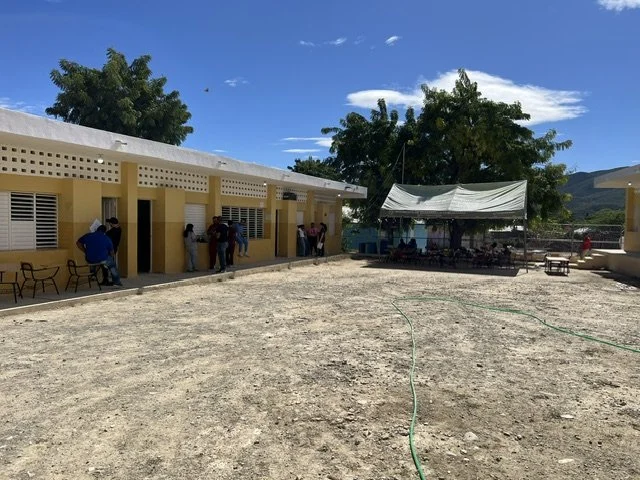
Our team provided care in the rural community of Oregano Grande, an area where access to consistent healthcare is extremely limited. Many families face significant barriers, including lack of transportation, limited infrastructure, and minimal access to preventive services. In some cases, healthcare is only sought during emergencies.
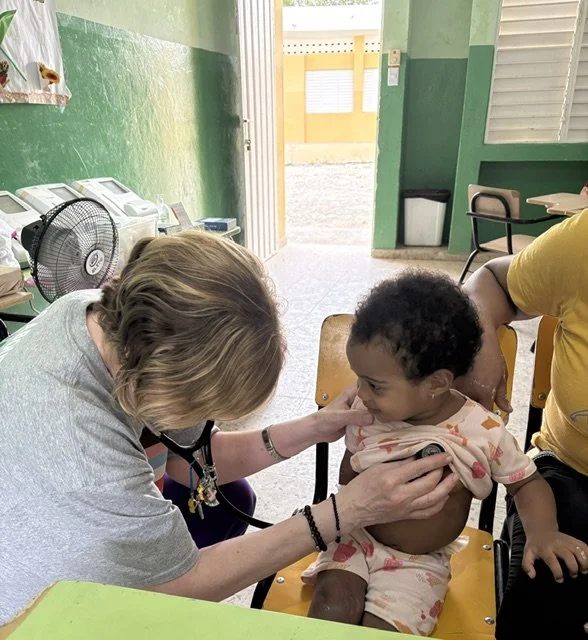
Each day, with the help of community leaders, we set up a makeshift clinic at a local school. Families waited patiently for care under a tent in the school yard. Parents came with thoughtful questions, hoping to better understand how to keep their children healthy. Children, even in the most challenging circumstances, brought energy, curiosity, and joy.
What struck me most wasn’t what was different—it was what was the same. Parents everywhere want the same things: healthy, thriving children and the knowledge to care for them.
At the same time, the barriers these families face are real—limited infrastructure, lack of consistent medical access, and fewer opportunities for preventive care. Being able to provide even a small piece of support—whether through treatment, education, or reassurance—felt incredibly meaningful.
More Than Medicine
While the clinical work is deeply rewarding, what stays with you are the connections—smiles from children, gratitude from families, and the resilience of communities working together despite limited resources.
Experiences like this reinforce why I chose pediatrics. Caring for children goes beyond treating illness; it’s about supporting families, promoting healthy development, and advocating for equitable access to care—no matter where a child lives.
Bringing It Back Home
When I returned to my work at Northwestern Children's Practice, I carried these experiences with me. It deepened my appreciation for access to care and reinforced the importance of listening, educating, and meeting families where they are.
It also reminded me that meaningful impact doesn’t always require traveling across the world.
Finding Ways to Help- At Any Age
One of the most important lessons from this trip is that there are countless ways to make a difference—both globally and right here in our own communities.
For families, this can be a powerful opportunity to involve children in acts of service. Helping a neighbor, volunteering at a local food pantry, donating gently used items, or participating in community events are all meaningful ways to give back. These small actions help children develop empathy, gratitude, and a sense of responsibility toward others.
Parents play an important role in modeling this mindset. When children see adults making time to care for others, they begin to understand that helping is not something “extra”—it’s part of being a community member.
Whether it’s across the globe or down the street, these experiences shape how children see the world and their place in it.
At Northwestern Children's Practice, we are reminded that caring for children extends beyond the exam room. Our office currently hosts two community collection boxes—one for diaper donations and another supporting Cradles to Crayons—giving families simple ways to help children in need right here in our local community. Even small acts of generosity can make a meaningful difference for a family.